Microplastics are a scourge on the environment, accumulating in farm soils and wriggling their way into the food supply—reducing harvests and harming human health. But what if discarded plastics could be used instead, to improve crop yields and make farming more sustainable?
Researchers are trying to do just that. They’re working to develop a new generation of polymers that can be converted into farm fertilizers at the end of their life—rather than shoved into landfills.
A new study, published August 18 in Scientific Reports, documents an important new step in this effort: engineers have found a way to make plant-based polymers whose stiffness can be tuned for different uses such as shopping bags or fidget toys. These new plastics aren’t themselves biodegradable—so no one has to worry about sandwich bags rotting in the kitchen drawer. But when they’re discarded they can chemically converted into fertilizers.
People have spent years using isosorbide, a chemical building block produced from plant-derived glucose, to create experimental plastics that could do this. A study published by the same team in 2021 produced isosorbide-based polymers that could be recycled into fertilizers. But these plastics were too hard and brittle most uses.
Chemists who developed conventional plastics faced similar problems. So they tuned the mechanical properties of their polymers by incorporating other agents to either soften or harden them. But the chemicals that they used often turned out to be harmful to humans—like the now-infamous bisphenol-A (BPA).
In the new study, scientists created a novel derivative of isosorbide that functions as a softening agent—allowing them to concoct isosorbide-based plastics that were softer and stretchier. They could then recycle these bioplastics by treating them with ammonia—releasing the original isosorbide building blocks as well as urea—a chemical frequently used for industrial nitrogen fertilizers.
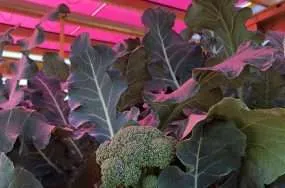
These recycled mixtures improved the growth yield of Arabidopsis thaliana, a plant belonging to the mustard family, and komatsu, a Japanese mustard spinach that is cultivated as food in Asia, by 5-fold and 2.5-fold respectively, compared to no fertilizer at all.
In the experiments with Arabidopsis, the recycled mixture of urea and isosorbide also improved the yield by about 1.3-fold compared to standard urea fertilizer alone.
Based on experiments published by the same team in 2025, isosorbide appears to stimulate plant growth independently of urea, by increasing tolerance to nitrogen deficiency and salt stress.
More research will be needed to explore the usefulness of these plastics. For example, the plastics produced in this study were deemed appropriate for use in plastic bags or clear plastic wrapping—but not for other uses, such as book shelves or bike parts that require greater strength. The authors also cite the need to conduct a ‘lifecycle analysis’ of these plastics—to quantify their overall water usage, energy consumption, and greenhouse emissions and compare these to standard plastics, and standard fertilizers. They’ll also need to show that bioplastic-derived fertilizers don’t add to microplastic pollution. But at least these new plastics are designed to avoid that problem.
Fujimata, et al. “Plastics to fertilizer: A polymer system based on isosorbide as a monomer, plasticizer, and fertilizer.” Scientific Reports. 2026.
Agrahari, et al. “Novel role of isosorbide as a biostimulant in enhancing plant growth and development in Arabidopsis thaliana.” BMC Plant Biology. 2025.
Image: ©Anthropocene Magazine