Is conservation too focused on rarity?
The rarest, most endangered species get the most attention—but common species, including common plants, should not be overlooked.

Nonprofit journalism dedicated to creating a Human Age we actually want to live in.

and throw your support behind
science journalism


The rarest, most endangered species get the most attention—but common species, including common plants, should not be overlooked.

For all its philosophical troubles, wilderness—big, contiguous places with minimal human footprints—is still enormously important to prevent extinctions.

People know that coral reefs are threatened by rising temperatures and acidifying water. But might artificial lights be causing problems, too?

Se asume ampliamente que los niños rurales están más cerca de la naturaleza que sus contrapartes urbanas. ¿Pero es eso realmente cierto?

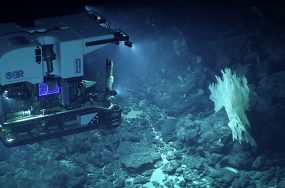
The deep seas are truly Earth’s last frontier, faraway worlds of alien beauty of which only an infinitesimal fraction have been explored—and it’s time to start thinking about how to restore them.
How much time should be devoted to celebrating nature’s marvels, and how much to confronting their destruction?

Warm, fuzzy insights into the social lives of animals have tended to involve creatures other than fish. Might manta rays help flip this script?

It’s widely assumed that rural children are closer to nature than their urban counterparts. But is that really true?
People tend to care about big animals, but there’s one group of megafauna whose decline has gone unremarked: those who live in freshwater.

Sometimes we’ve lost so much that we don’t even know what we’ve lost. Such is the curse of the shifting baseline: coming to accept as normal what is in fact a diminished state of affairs.
